
How to fix desktop icons missing or disappeared in Windows 10 and 11
When your desktop icons suddenly disappeared, turned into blank white paper boxes, or failed to appear on startup, a hidden view setting, a corrupted icon cache or system file, a bad Windows update, or a frozen Windows Explorer shell might be the cause. This step-by-step guide shows you how to restore missing or fix blank desktop icons in Windows 10 and 11.
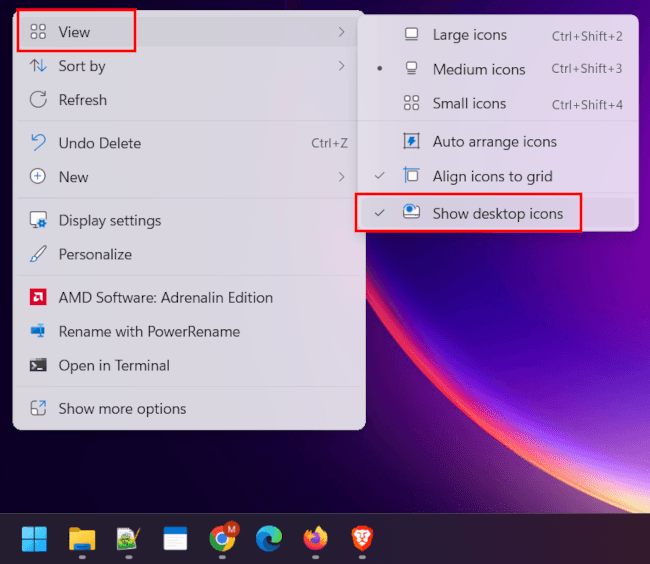
Make sure desktop icons aren't hidden (check view settings)
If all your icons suddenly vanished, a desktop view setting may be the cause.
- Right-click on an empty space on your desktop.
- Hover your mouse over View.
- Make sure there's a checkmark next to Show desktop icons.
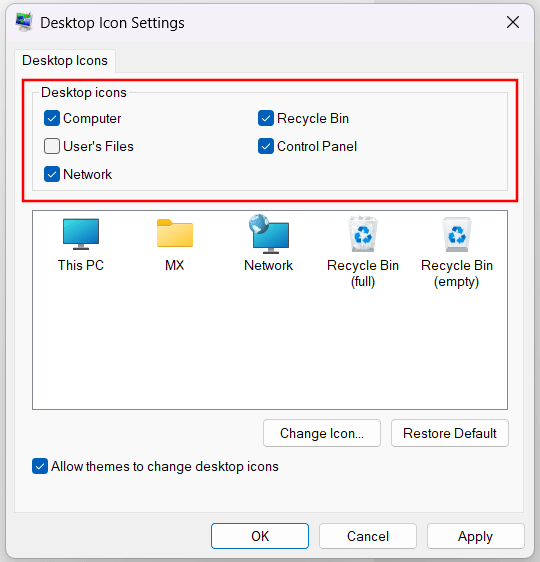
Desktop icon settings (Recycle Bin, Computer, Control Panel, or Network icons)
If only the Recycle Bin, Computer, Control Panel, or Network icons are missing, follow the steps below.
- Right-click on an empty space on your desktop.
- Click Personalize.
- Click Themes.
- Click Desktop icon settings under Related Settings.
- In the next window, check the box next to the item you want to show on your desktop (e.g., Recycle Bin).
- Click Apply at the bottom of the window.
- Click OK.
Restart the Windows Explorer process
Restarting the Windows Explorer process will shut down and restart the Windows shell—removing the desktop, taskbar, Start menu, notification area, and system tray from view before reloading them. Restarting this process will refresh the user interface and fix issues like missing or blank desktop icons without closing your other running programs or affecting your data.
- Press the Ctrl + Shift + Esc (Escape) keys on your keyboard simultaneously to open Task Manager (or right-click the taskbar and select Task Manager).
- Find the Windows Explorer process.
- Right-click Windows Explorer and choose Restart.
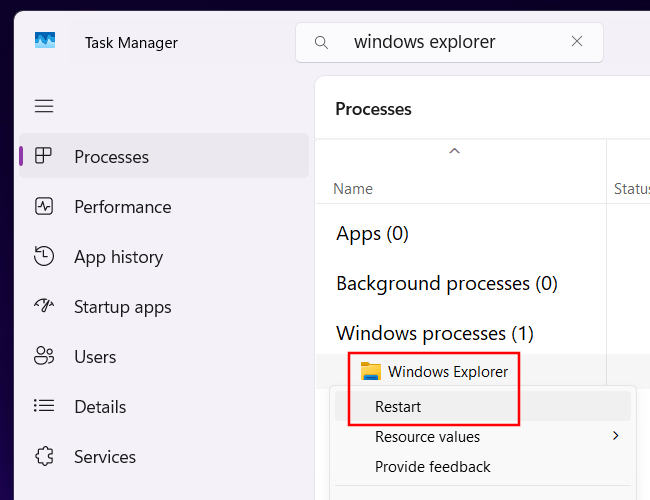
Your desktop icons, taskbar, start menu, notification area, and system tray will disappear for a short moment while the process restarts.
Clear icon cache
Clearing the icon cache may fix missing, blank, or broken desktop icons.
- Open File Explorer.
- On Windows 11, click View in the top toolbar > hover over Show > click Hidden items. On Windows 10, click the View tab in the top toolbar and check the box next to Hidden items.
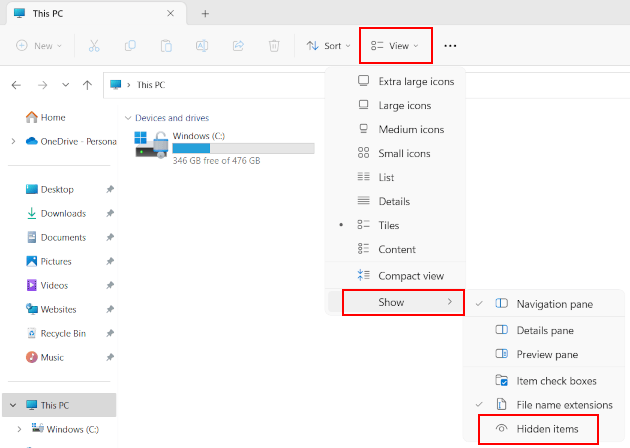
- Go to (C:) > Users > YourUserName > AppData > Local.
- Delete the IconCache.db file.
- Restart your computer.
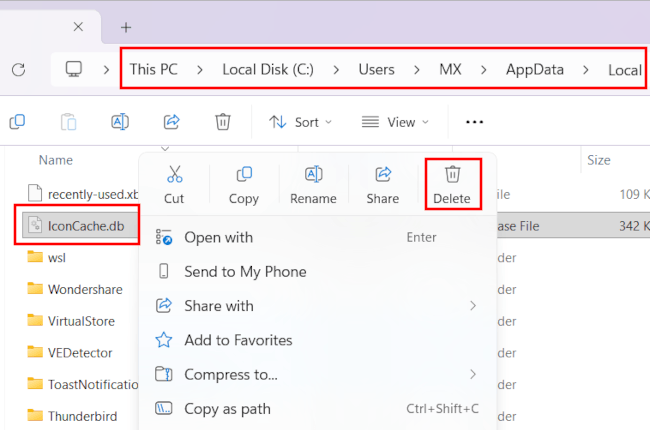
Don't worry, Windows will rebuild the IconCache.db file automatically.
Update Windows
A bug in the Windows operating system might be causing the missing or blank desktop icons issue. Installing the latest update may fix it.
- If you're using Windows 11, go to Settings > Windows Update. On Windows 10, go to Settings > Update & Security > Windows Update.
- On the right side of the Settings window, click Check for updates, then download and install any available updates.
Repair System Files (DISM & SFC)
System File Checker (SFC) is a built-in Windows tool that checks system files and repairs them if required. Note: Microsoft recommends running DISM prior to running the System File Checker because DISM provides the files required to repair your corrupted files. To do this:
- Right-click the Windows Start menu button.
- Click Terminal (Admin) or Command Prompt (Admin).
- Type (or copy and paste) the following command:
DISM /Online /Cleanup-Image /RestoreHealth - Press Enter.
- Wait for the verification to reach 100%. This process may take some time. It may appear stuck at around 60% for a few minutes. Do not close the window.
- Once DISM is finished, type:
sfc /scannow - Press Enter.
- Wait for the scan to complete. This process may take some time. SFC will show you whether it found corrupt system files and successfully repaired them.
- Restart your computer.
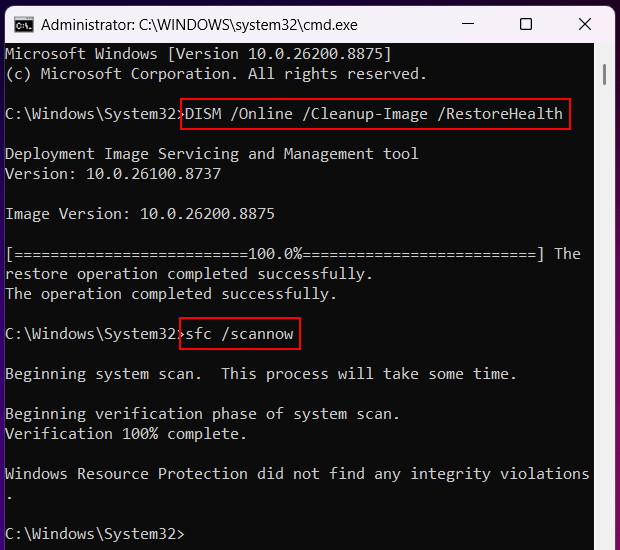
Note: DISM provides the files required to repair your corrupted system files; therefore, you should run DISM prior to running the System File Checker (sfc /scannow).
If the System File Checker tool is unable to fix corrupt files, visit my fix 'SFC unable to fix corrupt files' page.
Uninstall a recent Windows update
If the desktop icons disappeared or turned into blank white paper boxes after a recent Windows update, you can uninstall the update to try to get the icons back again.
- Open Settings.
- Click Windows Update.
- Click Update history.
- Click Uninstall updates in the “Related settings” section.
- Click Uninstall next to the update you want to remove.
- Once the update is uninstalled, restart your computer.
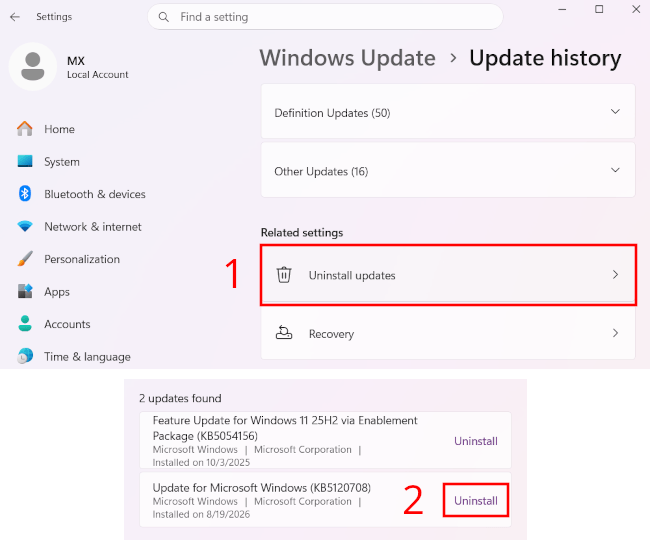
If uninstalling a recent update fixed your problem, wait a week or so before installing the update again. Quality updates get released on patch Tuesday, and sometimes these updates cause problems. And if Microsoft releases a bad update and the update causes a lot of problems, they usually pull back the update two or three days after the release day. And by the weekend, when your computer searches for updates, it's either fixed or already been pulled.
Related:
How to fix missing or blank taskbar icons in Windows 10 & 11
How to fix Windows Start menu button not working (fast fixes)
How to create a desktop shortcut to open multiple web pages
How to create a website shortcut on the desktop of your PC
How to show or hide the Recycle Bin on Windows 11