
How to reset audio settings in Windows 10 and 11
If you computer doesn't have sound, mismatched or uneven individual app volumes, or audio is playing through the wrong output device, resetting your Windows sound settings restores all audio devices, app volumes, and settings back to defaults. Whether you're using Windows 10 or Windows 11, this guide shows you how to reset your audio settings to default in a few quick steps.
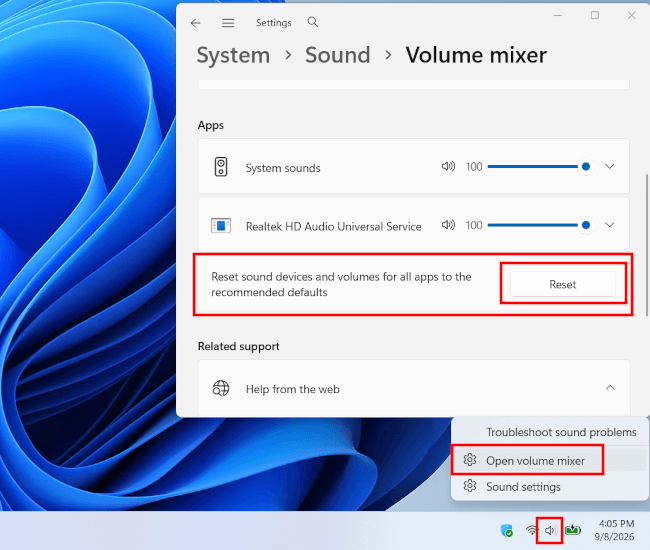
Quick tutorial: Right-click the speaker icon in the system tray and select Open volume mixer. Click the Reset button next to Reset sound devices and volumes for all apps to the recommended defaults.
Note: Resetting audio settings restores custom app volume levels, default playback devices, and spatial sound options to factory defaults. It will not delete your personal files or uninstall programs.
Method 1: Reset sound devices and app volumes in Settings
If certain programs (like web browsers or games) are muted or assigned to the wrong headphones or speakers, resetting the Windows Volume Mixer may fix the problem.
Windows 11
- Right-click the speaker icon in the system tray and select Open volume mixer.
- Click the Reset button next to Reset sound devices and volumes for all apps to the recommended defaults.
Windows 10
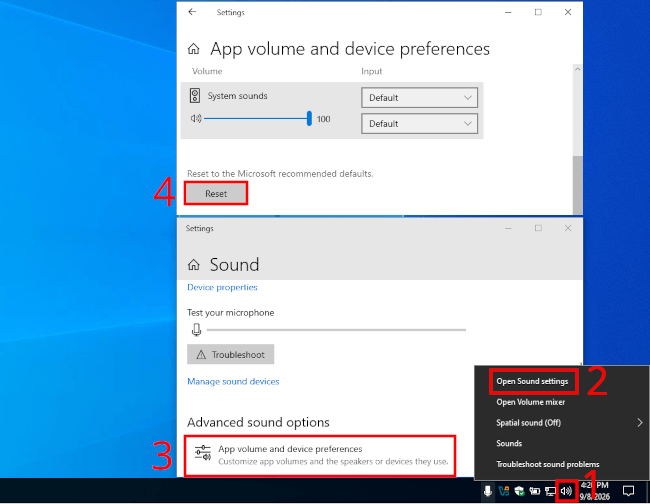
- Right-click the speaker icon in the system tray and select Open Sound settings.
- Click App volume and device preferences under Advanced sound options at the bottom.
- Click the Reset button under Reset to the Microsoft recommended defaults.
Method 2: Restart Windows audio services (if sound is frozen)
When Windows audio crashes or stops responding entirely, restarting the background Windows Audio service forces the system to reinitialize sound hardware without rebooting your computer.
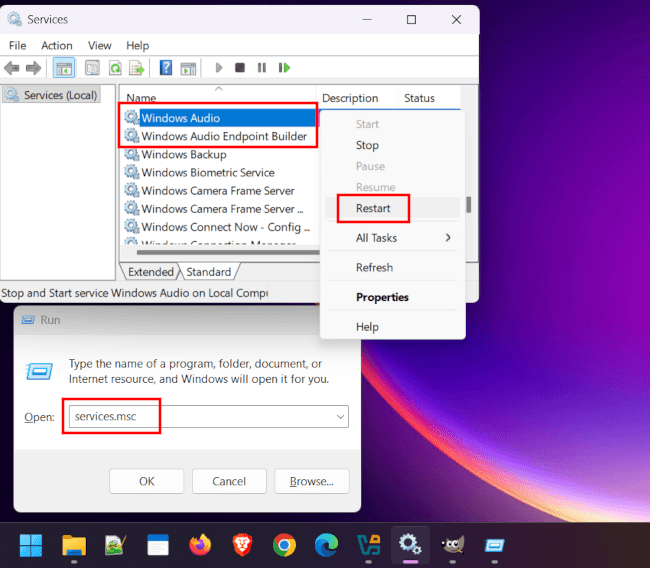
- Press Windows + R on your keyboard to open the Run dialog box.
- Type
services.msc. - Press Enter or click OK.
- Right-click Windows Audio and select Restart.
- Right-click Windows Audio Endpoint Builder and select Restart.
Alternatively, you can run PowerShell or Terminal as administrator and execute the following command:
Get-Service Audiosrv, AudioEndpointBuilder | Restart-ServiceMethod 3: Reinstall audio drivers in Device Manager
If your speakers or headphones are completely missing from the playback list or show a yellow exclamation mark, your audio driver may be corrupted. Uninstalling the device forces Windows to detect and reinstall a fresh driver upon reboot.
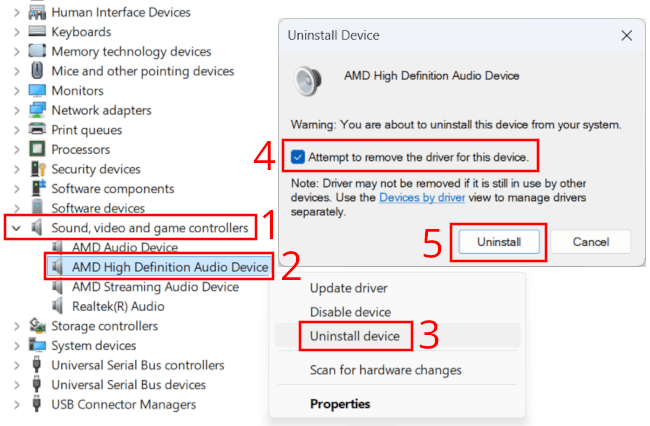
- Right-click the Windows start menu button and select Device Manager.
- Double-click Sound, video and game controllers to expand the category.
- Right-click your primary audio device (such as Realtek High Definition Audio or High Definition Audio Device) and select Uninstall device.
- Check the box for Attempt to remove the driver for this device, then click Uninstall.
- Restart your computer. Windows will automatically detect your audio hardware and reinstall a fresh, clean copy of the driver.
Method 4: Disable audio enhancements and spatial sound
Signal processing features and spatial audio enhancements can cause popping noises, distortion, or silence on certain sound cards. Disabling audio enhancements and spatial sound may fix these audio problems.
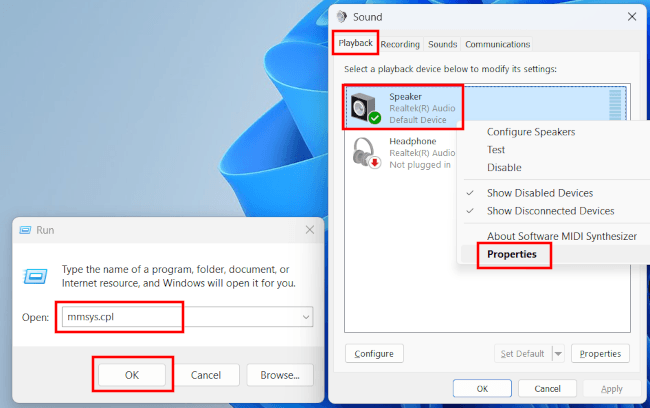
- Press Windows + R on your keyboard to open the Run dialog box.
- Type
mmsys.cpl. - Press Enter or click OK to open the classic Sound control panel.
- Under the Playback tab, right-click your default playback device (Speaker/Headphone) and choose Properties.
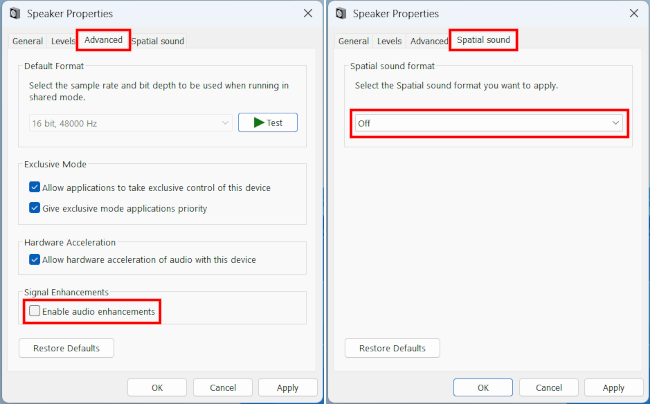
- In Windows 10, click the Enhancements tab. In Windows 11, click the Advanced tab.
- In Windows 10, check the box next to Disable all enhancements. In Windows 11, uncheck the box next to Enable audio enhancements.
- Go to the Spatial sound.
- Ensure Spatial sound format is set to Off.
- Click Apply.
- Click OK.
Related:
How to repair or reset the Settings app in Windows 11 & 10
PC connected to TV via HDMI but no sound? (easy fix)